How Lumyx Started: A Timeline, An Event, And A Map
Creating a case for a major crime is really simple. You just gather the evidence and show what happened, right?
As a team of law enforcement professionals and engineers with decades of experience in this space, we know that's just not true.
So we decided to build Lumyx. Here's how it started.
- We set out to develop a technology that revolutionizes how criminal cases are investigated, analyzed, and presented — to turn mountains of complex evidence into a simple story.
- We boiled the concept of a "criminal case" down to its most rudimentary building blocks: the time and the place that something happened.
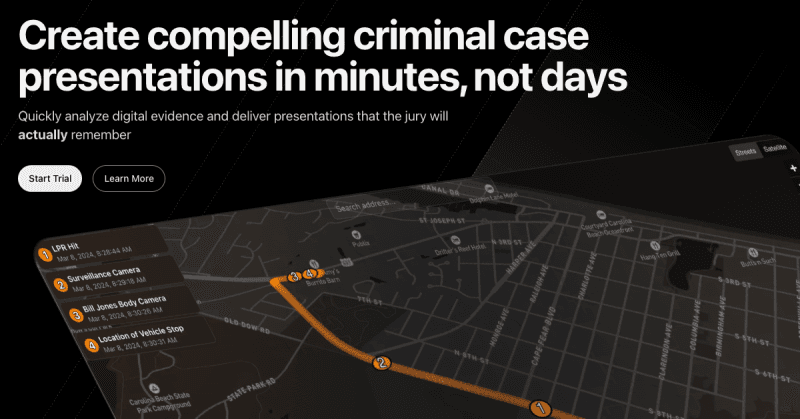
- We engineered a solution from the ground up to create compelling case presentations with three simple concepts: a timeline, an event, and a map.
How it works
- Drag and drop your location data — mobile, automotive, warrant return, or CDR.
- Do your analysis on our map. We've worked incredibly hard to make the analysis workflow in Lumyx simpler and more effective than anything else on the market.
- Click on the timeline, or directly on the map, to add events on top of the location data with additional evidence like surveillance footage, crime scene photos, or doorbell video.
Within minutes you'll have a compelling case presentation that retains the forensic accuracy of the source evidence. The video above is a demo of what a complex homicide case looks like in Lumyx.
Related posts

Welcoming Four New Public Safety Specialists
Four early-career professionals join Lumyx to learn how cases are built and how forensics teams actually work.

Welcoming David Scruggs As Head of Sales and Marketing
David brings deep experience scaling mission-critical technology with public safety teams to Lumyx's go-to-market.
Working With Some Of The Best Technical Minds In Law Enforcement
The people who shape Lumyx are the investigators and analysts who use it on real cases every week.